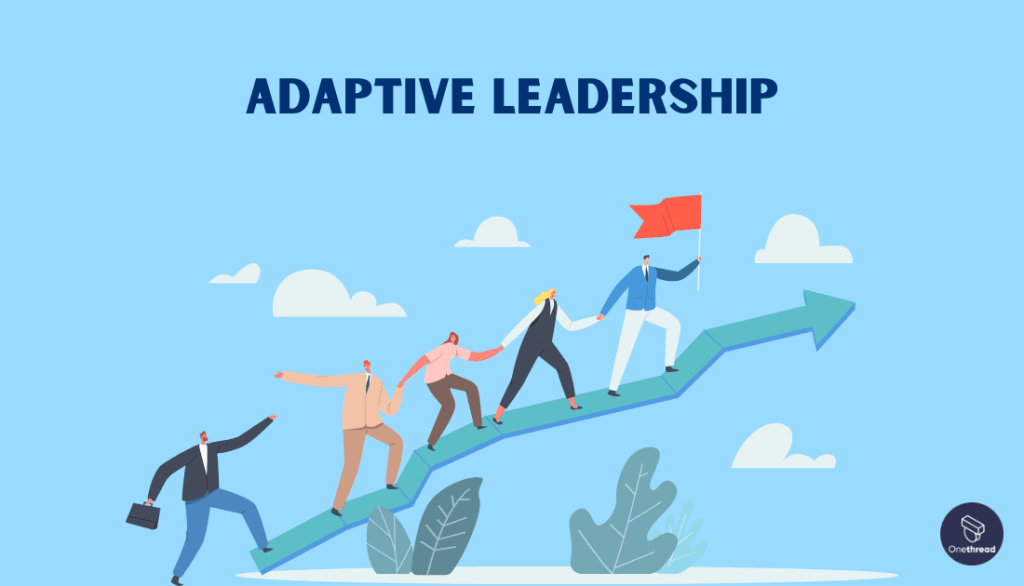
Organizational leadership today is significantly different than it was decades ago. Markets change quickly. Technology evolves constantly. Work depends on teams in many locations, cultures. And in this fast-moving environment, leaders need to adapt their style.
And this is where adaptive leadership comes into play.
As opposed to concrete paths, adaptive leadership encourages teams to be flexible and learn how to journey through change. This way, they are prepared to respond with agility when faced with uncertainty and new challenges.
What is Adaptive Leadership?
It is a leadership style, which addresses complex issues using users as well as teams. Adaptive leaders do not try to control every situation; instead, they promote learning and fostering innovation.
They understand that many problems don’t come with ready solutions. Such leaders encourage their teams to brainstorm new ideas and modify action plans as needed.
Adaptive leadership’s primary objective is to strengthen organizations in periods of transition.
Why Businesses Need Adaptive Leadership?
Change is the one constant in today’s business world. Organizations must adapt due to new technologies, changing markets, and developing customer needs.
Companies whose leadership style is behind will find it very challenging.
Adaptive leadership allows the organization to react swiftly to adversity while remaining stable. Leaders in this way foster creativity and empower teams to provide the solutions.
Sustains an innovation and continuous improvement focused workplace culture.
Key Traits of Adaptive Leaders
Successful leaders practicing adaptive leadership tend to have a few important things in common.
Some of these traits include:
- Open to new ideas − They embrace different perspectives.
- Good communication skills − They communicate with managers as well as employees.
- Emotional intelligence − They connect the dots and establishes trust.
- Problem-solving skills − They help teams navigate through complex challenges.
These traits enable leaders to navigate uncertainty while also energizing teams.
How Adaptive Leadership Strengthens Teams?
Supportive leadership goes a long way toward building a strong team culture. Collaboration and shared responsibility are the hallmark of adaptive leadership.
They do not provide exact directions; adaptive leaders engage their teams in handling the decisions. This makes employees feel recognized and more aligned with the organization’s goals.
Teams who work in an environment that reflects adaptive leadership work often become better problem solvers and gainer confidence.
The Essential Training − Practical Ways to Lead Adaptively
It takes time to train and practice this style of leadership. Here are several things leaders can do to enhance their adaptive leadership skills:
For example:
- Encourage open discussions within teams
- Stay informed about industry trends
- Be open to changing tactics if necessary
- Support continuous learning and development
Doing so arms leaders with flexibility and resilience.
Final Thoughts
Today’s workplace requires leaders who are capable of weathering uncertainty, who can prepare their teams through change. Few leader qualities might work in the modern society.
Adaptive leadership frees innovation, resilience, as well as future-readiness. Leaders who adopt this mindset don’t just navigate change − they strengthen their teams because of it.
 Begins Business blog
Leave a comment