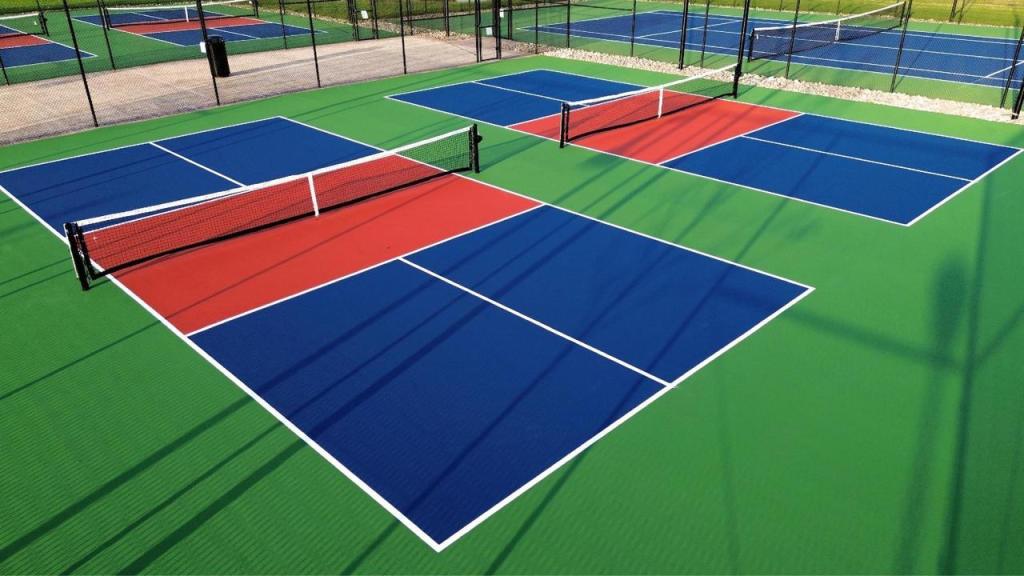
India’s sports ecosystem is undergoing a massive transformation. From school playgrounds to international stadiums, the focus is shifting toward high-performance, durable, and low-maintenance infrastructure. At the center of this evolution lies synthetic acrylic flooring, a game-changing surface technology widely used in tennis courts, basketball courts, and multi-sport arenas.
This article explores the technology, benefits, applications, and emerging trends shaping the future of sports infrastructure in India.
What is Synthetic Acrylic Sports Flooring?
Synthetic acrylic flooring is a multi-layer surface system made using acrylic resins, pigments, and aggregates applied over a concrete or asphalt base.
Typically, the system includes:
- Primer layer (base bonding)
- Resurfacer layer
- Cushion layers (optional)
- Acrylic color/top coats
- Line markings
This layered construction ensures uniform surface performance, durability, and safety for athletes.
Key Benefits of Synthetic Acrylic Flooring
1. All-Weather Durability
India’s climate varies from extreme heat to heavy monsoons. Acrylic surfaces are designed to:
- Resist UV damage and fading
- Prevent cracks due to thermal expansion
- Dry quickly after rain
This makes them ideal for year-round play.
2. Low Maintenance & Cost Efficiency
Unlike natural grass or clay courts:
- No watering, mowing, or chemical treatment required
- Simple cleaning (sweeping or washing)
- Recoating required only every few years
This significantly reduces operational costs.
3. Enhanced Player Safety & Comfort
Modern acrylic flooring includes cushioning systems that:
- Absorb impact
- Reduce stress on joints
- Lower injury risks
This is particularly important for training academies and schools.
4. Multi-Sport Versatility
Acrylic surfaces are widely used for:
- Tennis courts
- Basketball courts
- Volleyball courts
- Badminton courts
- Multi-purpose sports arenas
Their adaptability makes them ideal for space-constrained urban India.
5. Eco-Friendly Solution
Sustainability is becoming crucial in sports infrastructure:
- No water usage (unlike grass)
- No pesticides or fertilizers
- Lower carbon footprint
This aligns with India’s growing push toward green infrastructure.
Applications Across India
Synthetic acrylic flooring is widely used in:
- Schools & Universities – Durable and low-cost for daily use
- Sports Academies – Performance-oriented surfaces
- Residential Societies – Multi-use courts
- Public Parks – Jogging tracks and play areas
- Professional Stadiums – ITF-approved tennis courts
Its scalability makes it suitable for both grassroots and elite sports development.
Sports Infrastructure Trends in India (2026 & Beyond)
1. Rise of Multi-Sport Facilities
Urban land scarcity is driving demand for multi-purpose courts. Acrylic flooring supports multiple sports on a single surface, maximizing utility.
2. Smart Sports Infrastructure
Integration of technology is a growing trend:
- Sensor-based flooring to track player movement
- Performance analytics in training centers
- AI-based coaching tools
Smart surfaces are expected to redefine training methodologies.
3. Focus on Grassroots Development
Government initiatives like Khelo India are boosting:
- School-level infrastructure
- District-level sports complexes
- Affordable training facilities
Synthetic acrylic flooring plays a key role due to its cost-effectiveness.
4. Sustainability & Green Construction
Modern sports infrastructure is moving toward:
- Recycled materials
- Water-saving systems
- Solar-powered sports complexes
Eco-friendly acrylic systems are increasingly preferred.
5. Expansion of Private Sports Academies
India is seeing rapid growth in:
- Tennis academies
- Football training centers
- Fitness and sports clubs
These facilities demand professional-grade, durable surfaces, making acrylic flooring a top choice.
6. Urban Fitness & Recreational Spaces
Cities are investing in:
- Open gyms
- Jogging tracks
- Community sports courts
Synthetic surfaces are replacing traditional concrete due to better safety and comfort.
Challenges in Adoption
Despite its advantages, there are some challenges:
- Initial installation cost can be higher than basic concrete
- Requires proper base preparation (asphalt/concrete)
- Quality varies depending on materials and contractors
- Extreme dust and pollution can impact surface longevity
However, long-term benefits outweigh these limitations.
Future Outlook
The future of sports infrastructure in India is synthetic, smart, and sustainable. Synthetic acrylic flooring will continue to dominate due to:
- Increasing sports participation
- Government investments
- Rising awareness about athlete safety
- Demand for low-maintenance infrastructure
With India aiming to become a global sports powerhouse, modern surfaces like acrylic flooring will be the foundation of next-generation facilities.
Conclusion
Synthetic acrylic flooring has revolutionized sports infrastructure by offering a perfect balance of durability, performance, and sustainability. As India continues to invest in sports development, this technology will remain a cornerstone in building world-class facilities.
Whether it’s a school playground or a professional stadium, the shift toward acrylic sports surfaces is not just a trend—it’s the future of sports infrastructure in India.
 Begins Business blog
Leave a comment