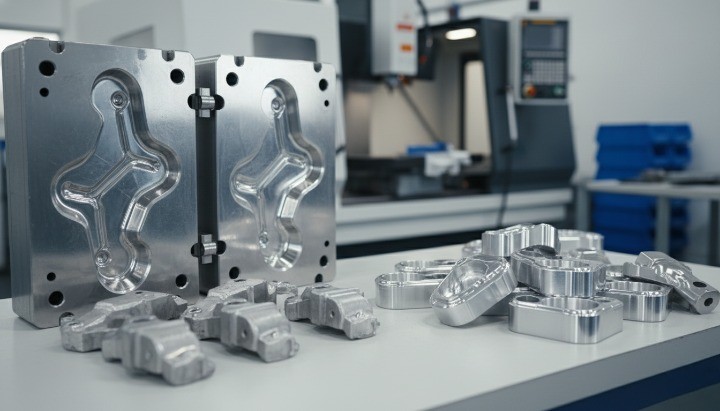
In industrial manufacturing, precision and cost-efficiency are the dual pillars of operational success. When sourcing critical components like high-pressure valves, flanges, or hydraulic couplings, procurement managers face constant pressure from inflation and tight margins. The most effective solution is repetitive machining in Brisbane, QLD.
Transitioning from low-volume, bespoke production to standardised, repetitive manufacturing (RM) cycles can drastically dilute overheads and drive down the unit cost of custom Industrial Fittings in Archerfield, QLD.
1. Amortising High Upfront Engineering Costs
Before a single chip of metal is cut by a Computer Numerical Control (CNC) machine, companies invest significant resources in Non-Recurring Engineering (NRE). This stage includes creating CAD models, programming CAM toolpaths, and designing specialised jigs and fixtures. In custom or low-volume manufacturing, these upfront costs are absorbed by only a few units, raising the price per piece.
Repetitive machining solves this by spreading these fixed configuration expenses across production runs of thousands. Over a massive volume, the initial setup cost per fitting effectively drops to near zero.
2. Maximising Machine Utilisation and Reducing Idle Time
In bespoke manufacturing, machines must be constantly halted, cleaned, re-tooled, and recalibrated between different jobs. Unfortunately, this downtime can be an expensive bottleneck.
Repetitive machining relies on dedicated manufacturing cells where the machine configuration remains consistent. Raw materials, such as high-grade stainless steel 316 or brass, are fed continuously using automated bar feeders. This dramatically lowers the operational hourly overhead charged to each industrial fitting, passing those savings directly to your bottom line.
3. Bulk Material Sourcing and Reduced Scrap
Raw material often represents the largest variable expense in component manufacturing.
Repetitive production schedules allow manufacturers to buy raw metal stock in bulk, unlocking wholesale commercial discounts that are unavailable for one-off jobs. Additionally, because the machining process is highly optimised and repeated continuously, tool wear is predictable, and material scrap rates drop significantly. Less wasted metal means a lower overall unit cost.
4. Lean Automation and Lower Labour Inputs
In a repetitive manufacturing environment, advanced robotics and automated loading systems can handle repetitive tasks. This reduces the need for constant manual intervention, allowing a single operator to oversee multiple machines simultaneously.
Streamline Your Component Sourcing with Rahi Engineering
Managing volatile supply chains requires a manufacturing partner who understands how to scale production efficiently without sacrificing precision.
At Rahi Engineering, we specialise in high-volume, repetitive machining solutions for premium industrial fittings. Our state-of-the-art CNC machining centres are optimised to deliver maximum repeatability, rapid turnaround times, and rock-bottom unit costs for your operation.
Visit our official website today to request a quote.


Leave a Reply