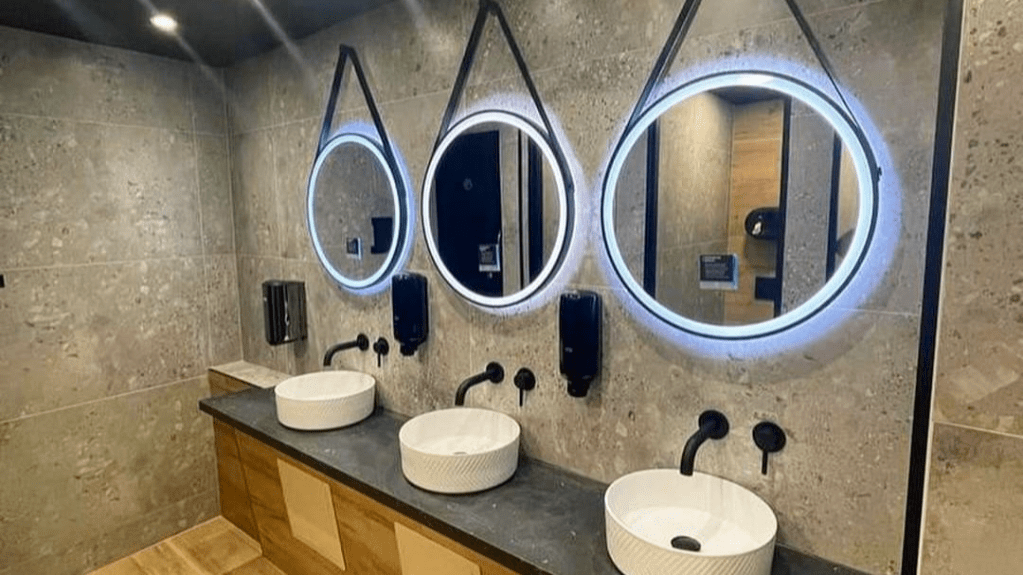
Restroom accessory specification affects multiple LEED v4.1 credit categories, and project teams that address it during design development avoid late-stage substitutions that jeopardize credit compliance after the scorecard is set.
Which LEED Credit Categories Do Restroom Accessories Affect?
Restroom accessories contribute to 3 distinct LEED v4.1 credit categories:
- Water Efficiency: faucet flow rates and touchless activation affect total fixture water consumption calculations
- Material and Resources: recycled content, EPDs, and regional manufacturing documentation
- Indoor Environmental Quality: VOC content of adhesives and coating systems used in accessory mounting and finishing
What Documentation Do LEED Material Credits Require?
LEED Material and Resources Credit 2 rewards products with Environmental Product Declarations, recycled content documentation, and regional manufacturing within 100 miles of the project site.
Specifiers selecting commercial restroom accessories for LEED projects should request 4 documents from shortlisted manufacturers before finalizing specifications:
- Environmental Product Declaration (EPD), product-specific or industry-wide
- Health Product Declaration (HPD) for finishes and adhesives
- Post-consumer recycled content percentage by weight
- Manufacturing location documentation confirming regional sourcing eligibility
Do Accessory Finishes Affect IEQ Credit Compliance?
Yes. LEED Indoor Environmental Quality credits address VOC emissions from building materials. Powder coat and paint systems on accessories require low-VOC documentation under IEQ credit requirements in projects pursuing the full IEQ package.
Stainless steel base materials are inert and do not emit VOCs, but adhesives used in some mounting systems may require evaluation. Coordinating finish and adhesive documentation with the LEED administrator before the construction document phase prevents missing submissions at credit close.
How Should LEED Documentation Be Coordinated Across the Project Team?
A 3-step documentation strategy reduces the risk of missing data at the LEED credit submission stage:
- Step 1: identify LEED target credits and required product documentation types during schematic design
- Step 2: request EPDs, HPDs, and recycled content statements from shortlisted manufacturers during design development
- Step 3: confirm documentation availability before finalizing specifications in the construction documents
LEED documentation for accessory products that is not collected until after construction often cannot be obtained retroactively, particularly for manufacturers who update product lines between specification and submission.


Leave a Reply