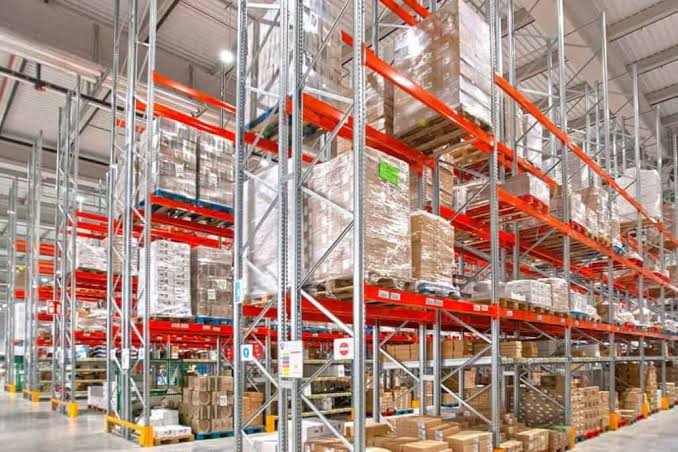
Buying racking looks like a procurement exercise and behaves like a construction project. There is a design stage, a lead time on fabricated steel, a site programme that has to work around an operating warehouse, and a handover that should produce documentation rather than just an invoice. Businesses approaching racking system design and installation in Singapore for the first time usually underestimate the first and last of those, which is where most of the difficulty ends up.
The Site Survey Comes First
Nothing sensible can be designed from a floor plan alone. A proper survey records the clear height under the lowest obstruction, the position of columns, the location and type of sprinkler heads, lighting positions, the sizes and positions of doors and loading bays, the condition and flatness of the slab, and the turning space at aisle ends. It also records what the building owner permits, since leased premises often restrict fixing into the floor or altering anything within a defined distance of the structure.
Understanding the Load Brief
The design depends entirely on what you tell the supplier about loads. Give the heaviest pallet weight rather than the average, the pallet footprint including any overhang, the loaded height, and whether loads are uniformly distributed or concentrated. State whether pallets are handled by forklift, hand pallet truck or both. A design based on an optimistic average will be legally rated for a load your operation exceeds routinely, and the rating on the sign is the figure that matters after an incident.
Layout Decisions That Cannot Be Reversed Later
Aisle width, bay depth, beam pitch and system type determine your operating cost for the life of the installation. Aisle width is dictated by the handling equipment, so the truck decision should precede the layout rather than follow it. Beam pitch determines how much air is wasted above each load. System type sets the trade between density and selectivity. These choices interact, which is why a layout should be produced and reviewed as a drawing rather than agreed verbally on site.
Regulatory and Building Considerations
Racking above certain heights, mezzanine structures and anything altering fire protection arrangements carry approval requirements, and in-rack sprinklers may be needed depending on storage height and commodity. Landlords typically require submission of layout drawings and reinstatement at lease end. Establishing these obligations early prevents a design being redrawn after fabrication has started, which is the point at which delays become expensive rather than merely irritating.
Lead Times Are Real
Racking components are manufactured to the design, so the gap between order and delivery is measured in weeks rather than days. Where a business is fitting out new premises with a fixed handover date, the racking order usually needs to be placed before other trades feel ready. Ask for the lead time in writing, ask what it depends on, and build float into the programme, because a warehouse that cannot be stocked on schedule affects everything downstream of it.
Installing Around a Working Operation
Most installations happen in premises that cannot simply stop. That means phasing: clearing and installing one zone while operating from another, or working outside operating hours. Both need planning. Agree in advance which areas are handed over when, how materials will be stored on site, how the installation crew and the forklift traffic will be separated, and who is responsible for moving existing stock. Vague arrangements here produce the two most common site problems, which are congestion and damage.
Comparing Quotations Meaningfully
Two quotes for the same number of pallet positions can describe quite different structures. Ask each supplier to state the beam and upright sections, the rated capacity per beam level at the proposed beam pitch, the bracing arrangement, the anchor specification, the decking type if any, and whether protection is included or extra. Ask what the price assumes about site access and working hours, since out-of-hours installation is priced differently. Once every proposal carries those lines, the cheaper one usually turns out to be a lighter section rated for less, which is only a saving if your loads never grow.
What Good Installation Looks Like
Uprights should be plumb, baseplates fully seated and anchored to the specified fixings, beams properly engaged with safety locks fitted, and bracing installed exactly as designed rather than adjusted to suit site conditions. Frames must be aligned so aisle widths are consistent along their length. Any competent provider of racking installation services will also fit column guards and end-of-aisle protection as part of the works rather than offering them as an afterthought.
Handover Documentation
The handover should include the layout drawing as installed, load notice plates showing the rated capacity per beam level and per bay, the configuration those ratings assume, the design standard applied, and the anchor specification. You should also receive guidance on inspection and on what constitutes damage requiring immediate offloading. Without this paperwork you cannot safely load the racking, cannot inspect it meaningfully, and cannot modify it later, which makes it as important as the steel itself.
After the Installers Leave
Brief the warehouse team on the load limits and on why beam levels must not be moved without checking the load table. Establish a routine visual inspection and a process for reporting impact damage immediately. Racking fails progressively rather than suddenly, and almost every serious collapse traces back to damage that was visible and unreported. Handled properly, racking system design and installation in Singapore is a project with a defined end, after which the structure needs attention only a few times a year.
 Begins Business blog
Leave a comment